

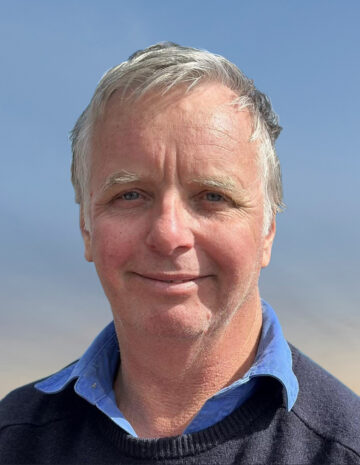
Interview by Gabrielle Toscan, Managing Director
For Mark Gubbins, fire season doesn’t start with a date on the calendar. It starts in spring, when he looks at how much feed is coming through and how much water is on hand to fight a fire.
Mark is Managing Director of Gubbins of Coolana, a fourth-generation family farm at Chatsworth, in Victoria’s Western District, running a high-quality commercial beef herd and a commercial prime lamb enterprise. He has farmed there all his life, starting full-time alongside his father in 1985. Mark is also a Deputy Group Officer with the CFA‘s Westmere group, which covers the district from Ararat to Chatsworth.
We asked Mark how he prepares the farm for fire season and what he wishes every farmer would do. Below the interview, we’ve added our own checklist for getting your insurance ready before the heat arrives.
In conversation with Mark Gubbins
When does fire season start to feel real for you?
“There’s no specific moment. It’s the build-up of the spring, the type of feed we get and the water we’ve got available around us to deal with a fire if there is one. As you come into spring you think: what’s it going to be like? What should we start doing? Have we burnt any piles that we need to spread out and make sure they’re out?”
How is this season shaping up?
“A couple of weeks ago it looked like our season was cutting out really early and we weren’t going to have great bulks of feed. But in the last week we’ve had some rain and things are progressing, which could create more bulk feed load and a higher fire risk. That’s in our district. Through the Westmere group, which goes from Ararat to Chatsworth, the feed load varies, so the fire season could look different from place to place.”
Water is his bigger worry this year. “The biggest problem in our area is that we’ve got no stored water in dams to fight fires. We’re lucky we’ve got bores that we pump to fill the tanks, but if you want to pull 20 trucks of water out, we just haven’t got it.”
The backup plan is to bring water in. Councils have been spoken to in advance, although it takes time to organise depending on the hour or whether it’s a public holiday. Private water tankers from the cropping country to the north can step in, and at Chatsworth there’s the Hopkins River. “It’s dirty, yucky water, but you do what you’ve got to do.”
Do you have a written fire plan?
“We don’t have a written plan. We have a meeting every year with our staff as we come into fire season: what piles have you burnt, who hops on the fire truck, who does what, and where can we put the livestock if there’s a bad day or an imminent threat? That’s not always easy, because it comes down to the feed load at the time, but you have a plan.”
The plan covers the houses too. Last year a late spring left heavy feed right up to Mark’s house, and he ran 2,000 sheep there for six weeks to eat it down. This year he has planted summer crops all around the house as a break.
Are you doing anything differently this year?
“Not a lot differently. We’ve made sure we burnt our piles really early and got them spread out. Last year we had a contractor who lit fires a bit late, and we had to monitor them all the way through summer. We don’t have that worry this year. Getting all that done early is part of the big planning picture, because it’s one of the biggest risks in farming.”
What have you learnt over the years with the CFA?
“A large number of the fires we’ve had to deal with over the years have come from burn piles that weren’t managed well. Then in summer, out it comes and off it goes.” His advice: burn piles as early as you can, spread them out in late winter or early spring, and let the rain get over them.
He also points to the group’s own machinery bans. On a really bad day, the deputy group officers look at the weather, and talk with the Group Officer to agree that no one works in a paddock for a set time. “We do that as people, not as a ruling by a council. Most people respect it really well.”
The same common sense applies on any farm. “Why would you be out with a slasher on a day running to the high 30s with a north wind? Or a lawnmower, mowing your drive with dry grass close by? A lot of it is about thinking, planning and talking. Everything’s communication.”
What about insurance? Do farmers think about it before summer?
For Mark, the key question isn’t whether every shed is insured. It’s whether the business could keep going after a fire. “It doesn’t matter when your renewal is. Being able to keep trading, rebuild as quickly as you can and look after your livestock is the most important thing.”
For his own farming operation, he makes the case for spending premium where it counts: “You want your houses rebuilt. You need a woolshed and cattle yards. But some of our sub-buildings, we might not rebuild because they’ve been there since 1930 and they’re redundant. We want to put our insurance budget into the most valuable areas.”
What's the one thing you wish every farmer did before summer?
“Think about the fire season, for a start. A lot of people aren’t proactive, they’re reactive. You’ve got to plan ahead and think about what could happen. Prepare around your buildings, clean your gutters, and think about where you’ll put your livestock if something goes wrong.”
He saw the difference in the Grampians fires. “Some really good operators did a brilliant job before the fires. They had a plan. A few didn’t do anything, and one of them lost a lot of livestock because he didn’t plan. A plan doesn’t stop the fire, but it mitigates some of the problems.”
Mark’s summary: “Plan for what could happen on the worst day.”
Getting your insurance ready for summer
Mark’s point holds for insurance too: plan for the worst day. Your renewal may have come up in winter, but the farm can change a lot between then and summer. Here’s what we suggest checking before fire season.
- Check your sums insured now, not just at renewal. Building and fencing costs keep rising. If your figures were set a year or more ago, you could be underinsured. That means a lower payout when you need it most.
- Plan for keeping the business running. As Mark says, the real question is whether you can keep trading after a fire. Talk to us about cover for lost income and extra costs, such as agistment, buying in feed, or hiring equipment while you rebuild.
- Spend your premium where it counts. Look at what you would actually rebuild. An old shed you’d never replace might come off the policy, freeing up premium for the house, woolshed, yards, fencing or business interruption cover.
- Think about how you’d rebuild. If you’d rebuild fencing differently after a fire, for example by moving to virtual fencing, talk to us now. It’s better to have that conversation before a claim than during one.
- Insure your farm technology. Virtual fencing collars and transmission towers are generally your property to insure once they’re delivered, even if the supplier has a warranty. We usually cover them under farm contents.
- Review hay and fodder. Make sure the amount insured matches what’s in the shed or stack this summer, not last year. Spreading stacks across different sites can also reduce how much one fire can take.
- Check your livestock cover. Confirm whether your stock are covered for fire, and for how much. Then make the plan Mark talks about: where they’ll go on a bad day, and who moves them.
- Know your liability if a fire starts on your property. A fire that starts from machinery, a slasher or a burn pile and spreads to a neighbour can lead to a large claim. Check your public liability limit, and follow fire danger restrictions and local harvest bans.
- Record what you have. Walk around with your phone and video your sheds, machinery, equipment and stock. Keep the footage, your policy documents and our contact details somewhere you can reach if the farm office is gone, such as cloud storage or your email.
Preparing the house as well? See our bushfire home insurance checklist.
Talk to us before summer
A plan doesn’t stop a fire, but it changes what happens afterwards. If you’d like us to review your cover before fire season, call the Breakwater team or drop into our Warrnambool office. We’ll go through it with you and make sure your farm insurance matches how the farm runs today.
A big thank you to Mark Gubbins for sharing his valuable time and experience with us.
This article provides information rather than financial product or other advice. The content of this article, including any information contained in it, has been prepared without taking into account your objectives, financial situation or needs. You should consider the appropriateness of the information, taking these matters into account, before you act on any information. In particular, you should review the Product Disclosure Statement (PDS) for any product that the information relates to before acquiring the product.
Information is current as at the date the article is written as specified within it but is subject to change. Breakwater Insurance Brokers make no representation as to the accuracy or completeness of the information. All information is subject to copyright and may not be reproduced without the prior written consent of Breakwater Insurance Brokers.